


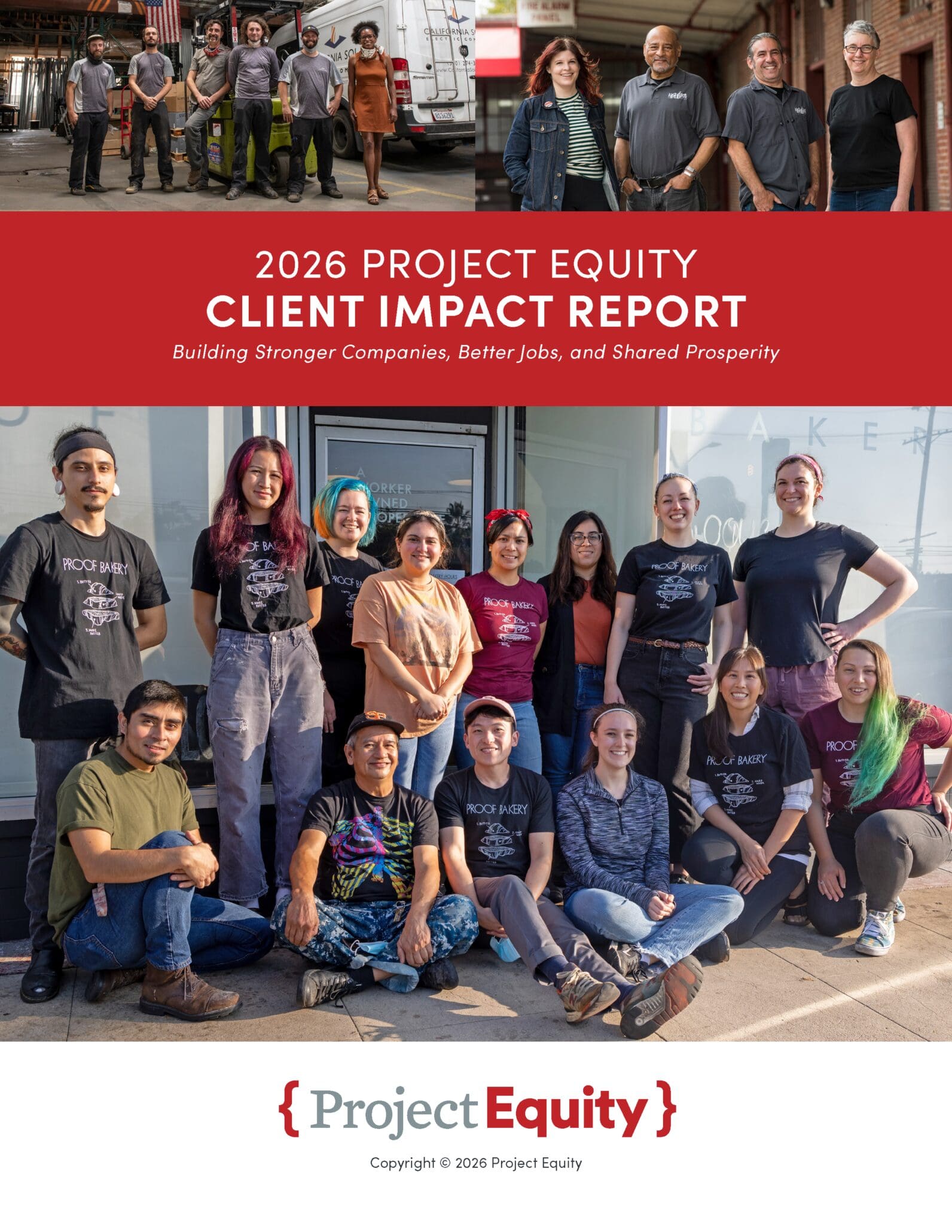
Inside the Numbers: The Real-World Impact of Employee Ownership
What happens when workers gain a real stake in the businesses they help build? Project Equity’s 2026 Client Impact Report draws on nearly a decade of data from 23 employee-owned companies and the evidence is clear: employee ownership delivers powerful benefits for employees and businesses alike, from wage growth and profit sharing to lower turnover and more resilient, inclusive workplaces.
- Accelerated Growth: 67% of surveyed businesses have demonstrated revenue growth since their earliest reporting year, by an average of 59% over roughly four years.
- Elevated Job Quality: 88% of companies have raised wages for non-management employees, and 100% provide paid leave.
- Direct Wealth Creation: More than $3.4 million in profits have been shared with worker-owners across 15 companies since 2018.
- Workforce Stability: 91% of companies reported average or below-average turnover compared to peers in their industries.
Download our 2026 Client Impact Report to explore these findings and more.
Discover the Imapct
Frequently Asked Questions
1. What kinds of companies are included in this report?
The 2026 Client Impact Report draws on data from 23 businesses in Project Equity’s client portfolio that have transitioned to worker cooperatives (18 companies) or employee ownership trusts (5 companies), spanning a diverse range of sectors, from wholesale trade and landscaping to renewable energy and apparel manufacturing.
2. Does transitioning to employee ownership hurt business efficiency?
The data indicates the exact opposite. Employee-owned companies are not just growing, but doing so efficiently. 78% of the businesses with multi-year financial data increased their productivity—measured as revenue per employee—by an average of 51% since their earliest reporting year.
3. How does this business model impact worker compensation and wealth?
Employee-owned companies demonstrate a strong commitment to fair pay and shared prosperity. Across the portfolio, non-management wages grew by an average of 25% over roughly four years. Additionally, nine companies distributed over $640,000 in direct profit sharing in 2025 alone.
4. Can employee ownership help with recruitment and retention?
Yes, workforce stability is one of the clearest findings across our portfolio. The average turnover rate among companies that reported comprehensive data is just 20%, dropping to 13% when excluding seasonally-driven industries. Worker-owners tell us that job security, transparent decision-making, and a genuine sense of shared purpose make these companies highly attractive places to build a career.


