


Annual Report
Building the Future of Employee Ownership: 2025-2026 Year in Review
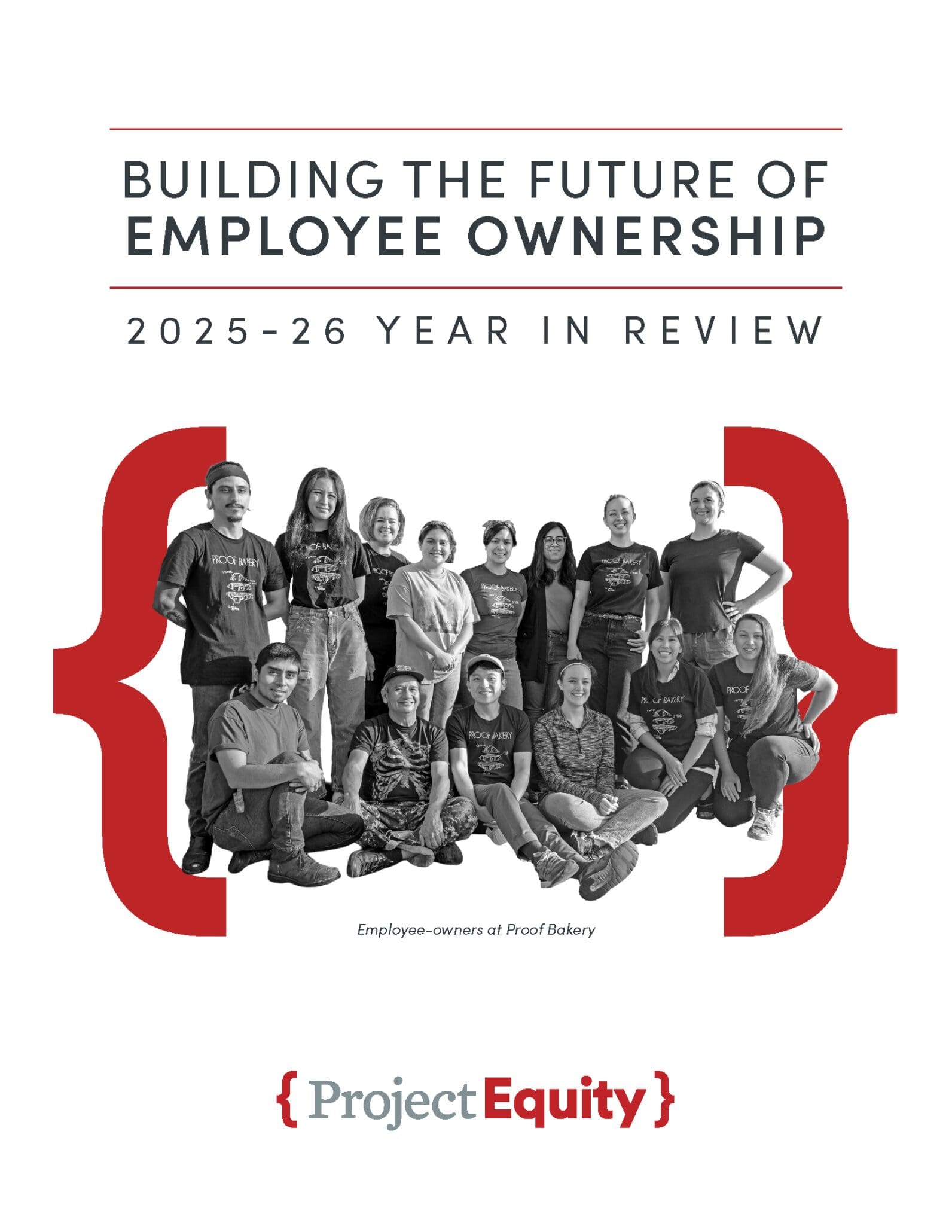
Preserving Legacies. Retaining Jobs. Building Wealth.
Employee ownership is more than just a succession strategy, it is a practical and scalable business model that strengthens companies, anchors jobs locally, and creates pathways for workers to build long-term wealth.
Download the Project Equity 2025–2026 Year in Review
Key Insights Inside the Report:
- Business Resilience: Data showing how employee-owned companies are driving growth, with clients reporting a 46% average increase in revenue alongside strong workforce stability.
- Capital Deployment: A look at the $2.9 million deployed through the EO Catalyst Fund to finance transitions, plus the launch of our new Community Capital Pilot program.
- New Research and Tools: Insights from our multi-year study on Black employee ownership and the rollout of the Ownership Opportunity Map, designed to target EO strategies where they have the greatest impact.
- National Expansion: How we are scaling the movement by equipping thousands of business advisors and building robust regional hubs, including in Atlanta, Birmingham, and Chicago.
Access the Insights
Frequently Asked Questions
1. What impact did Project Equity achieve in the 2025-2026 year?
Over the past year, Project Equity advised 220 businesses and positively impacted 1,344 workers. The organization also deployed $2.9 million in capital and provided hands-on technical assistance to 37 businesses.
2. How does employee ownership affect business resilience and growth?
Data from Project Equity’s 2024 Impact Measurement & Management reporting shows that employee ownership strongly supports business growth and stability. More than half of the clients that submitted data experienced revenue growth averaging 46% over the past two to four years. Furthermore, 83% of clients reported average or below-average employee turnover compared to their industry peers.
3. What new initiatives and research are highlighted in the report?
The Year in Review details several key tools and programs, including the launch of the interactive Ownership Opportunity Map, which helps pinpoint where employee ownership can have the greatest impact based on income disparities. It also covers the findings of a multi-year research initiative focused on Black employee ownership as a practical pathway to closing the racial wealth gap.
4. How is Project Equity expanding the employee ownership ecosystem?
Project Equity is scaling the movement by training trusted business advisors and building regional hubs. This includes delivering the EO Advantage curriculum to more than 6,000 advisors and hosting ecosystem-building events in areas like Chicago, California, Atlanta, and the Greater Washington D.C. region.


